A full operating model for governing automotive catalog master data across suppliers, marketplaces, and ERP boundaries with measurable quality outcomes.
Automotive master data programs fail when governance is treated as a one-time cleanup. The teams we work with usually arrive with a 12-month "data quality" project that turned into a permanent firefight: stewards copy supplier spreadsheets into the PIM, marketers override fitment to ship promotions, and the warehouse rejects shipments because part numbers don't match what the ERP expects. The fix isn't a bigger MDM tool — it's an operating model that pins ownership, decisions, and SLAs to specific roles and measures the right outcomes weekly.
This post describes the operating model we deployed for a Bavaria-based EU auto parts distributor managing 10.2M SKUs from 340+ suppliers, where wrong-fit returns dropped from 7.4% to 4.1% and supplier onboarding went from 6–9 weeks to 4–7 days.
The governance topology
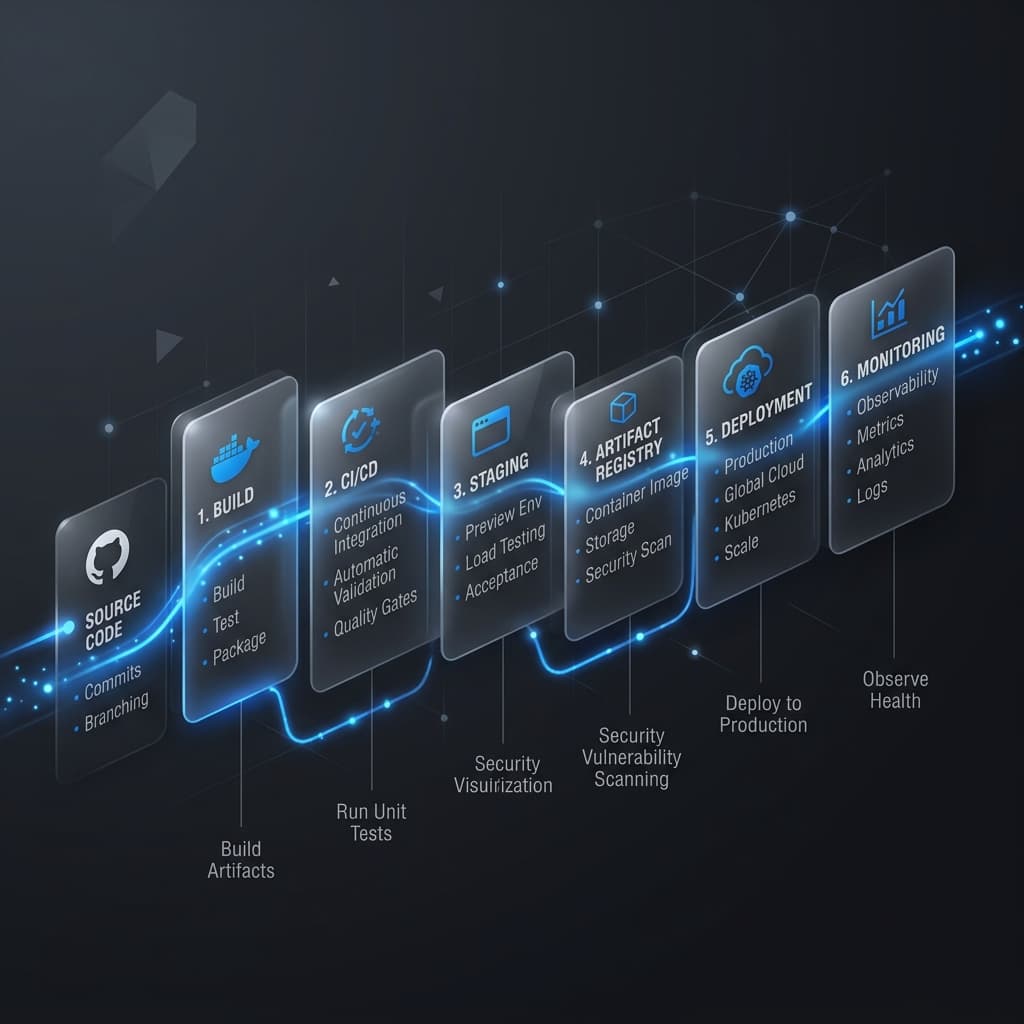
Every catalog item moves through five stages, and each stage has exactly one accountable owner. Cross-functional debates happen before a SKU enters the canonical core, never after.
The closed loop from returns back to the steward queue is the single most important arrow on the diagram. Without it, defects accumulate silently for quarters because no one connects a 3% return spike on brake pads to the supplier feed that introduced ambiguous fitment two months earlier.
Role definitions that actually hold under pressure
Most governance decks list "data steward" without saying who fires whom or who pays for incidents. We enforce four roles with non-overlapping authority:
- Domain steward (one per category — brake, suspension, electrical). Owns canonical attributes, accepts/rejects supplier proposals, and is the final word on fitment confidence below 0.85.
- Supplier liaison (commercial). Owns the supplier scorecard and is the only person allowed to escalate a quality dispute to procurement. This separation prevents stewards from being pressured by commercial deadlines.
- Platform engineer (one per pipeline). Owns the staging-to-core promotion pipeline, the validation rules, and the on-call rotation for ingestion failures.
- Catalog operations lead. Owns weekly cadence, KPI publication, and the standing decision log. Does not own any individual category.
When all four roles are present and weekly cadence is running, dispute resolution drops from days to hours because the decision rights are explicit.
Core control points
We protect the canonical core with five gates. A SKU cannot reach the ERP until all five pass:
- Canonical part identity is resolved against OEM cross-reference (ETK/TecDoc) with provenance recorded.
- Fitment confidence scored per vehicle generation — anything under 0.85 routes to manual review.
- Mandatory enrichment fields populated: weight, dimensions, hazmat class, country of origin, warranty term.
- Image and document attachments validated for resolution and licensing.
- Supplier scorecard above the category threshold (we use 0.92 for safety-critical categories, 0.85 elsewhere).
Gates are enforced in code, not policy. The promotion API rejects payloads that fail any check and returns a machine-readable reason that the steward queue renders as an actionable card.
KPI design that drives behavior
Vanity metrics like "records cleaned this month" rewarded the wrong work — stewards optimized for volume on low-impact SKUs. We replaced them with four metrics that map directly to commercial outcomes:
- Wrong-fit return rate by supplier — the headline metric, reviewed weekly with procurement.
- Defect leakage from staging to production — measures whether our gates are catching real issues; if leakage is high, gates need tightening.
- Rework cycle time per steward — measures whether the queue UI and tooling are good enough; long cycle times usually mean stewards are doing the platform team's job manually.
- Time-to-publish for high-priority SKUs — measures whether the operating model is fast enough to support commercial launches.
We publish a one-page dashboard every Monday at 09:00 CET. Numbers go to procurement, category managers, and the platform team simultaneously. No private dashboards — when everyone sees the same numbers, the debate is about action, not interpretation.
Weekly cadence
The operating rhythm is deliberately boring:
- Monday 09:30 — 30-minute scorecard review. Category managers, lead steward, platform on-call.
- Wednesday 14:00 — 45-minute supplier escalation review. Supplier liaisons present any supplier breaching the scorecard threshold; decisions logged and acted on within five business days.
- Friday 16:00 — 30-minute platform review. Validation rule changes, gate threshold adjustments, and ingestion incidents.
That is the entire ceremony footprint. Quarterly business reviews exist but do not substitute for the weekly loop.
What we'd do differently
Two things we got wrong on the first attempt and corrected within the first quarter:
First, we initially built the supplier scorecard as a 23-dimension index. Nobody trusted it because nobody could explain a score change. We collapsed it to four dimensions (return-driven defect rate, on-time feed delivery, image completeness, mandatory field completeness) and trust returned within two cycles.
Second, we tried to centralize all stewardship in one team for "consistency". This created a bottleneck and resentment from category teams who felt they had lost control. Federating stewards back to category teams — with a small central platform group owning the pipeline and gate rules — was faster and produced better data because the people closest to the commercial impact were the ones making the calls.
Closing
Master data governance is operational discipline, not a project. Once the roles, gates, KPIs, and cadence are in place, the system absorbs new suppliers, new categories, and new channels without re-litigating the governance model. That's the actual deliverable.